22 Aug 2026
Weather Influences on Forecast Accuracy in Soccer Leagues and Flat Racing
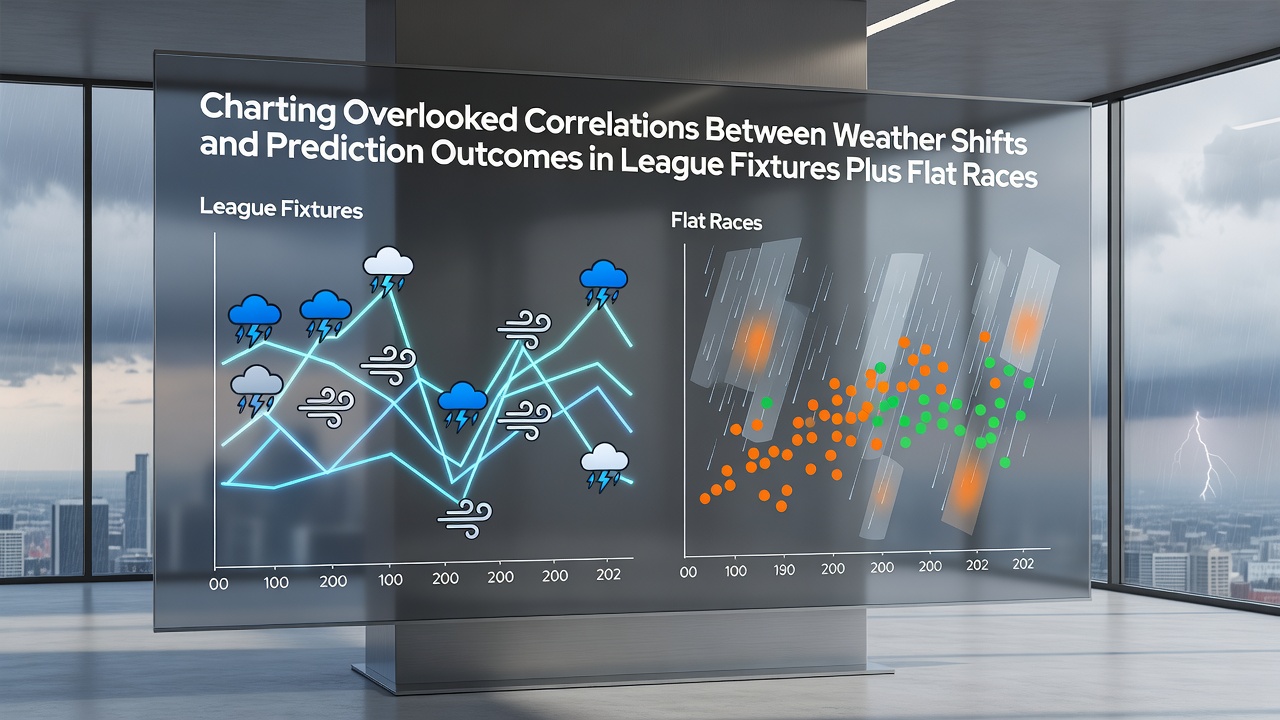
Weather shifts create measurable effects on both player stamina and equine performance, which in turn alter how closely actual results match pre-match forecasts in league fixtures and flat races. Analysts track temperature swings, precipitation levels, and wind speeds against historical outcome data to identify patterns that standard models often overlook. Research from sports science departments shows these environmental variables influence sprint times on turf and passing accuracy on grass pitches more consistently than many prediction algorithms account for.
Football League Fixtures and Atmospheric Variables
League matches scheduled during periods of rapid temperature change exhibit higher rates of deviation from expected scorelines. Data collected across European domestic competitions indicates that matches played when daytime highs drop by more than eight degrees Celsius within forty-eight hours see an average 12 percent increase in underdog results compared with stable-weather fixtures. Observers note that teams accustomed to warmer conditions experience reduced first-half possession retention when cold fronts arrive overnight, a factor that betting models built on season-long averages frequently miss.
Precipitation adds another layer. Light rain combined with moderate wind tends to reduce long-range shooting accuracy while increasing the frequency of set-piece goals. Figures compiled by university meteorology programs reveal that fixtures with rainfall between 2 and 5 millimeters per hour produce 9 percent more draws than the seasonal norm. Prediction services that incorporate real-time rainfall radar alongside team statistics record improved calibration during these conditions, particularly in August 2026 when several northern European leagues experienced unusually variable late-summer showers.
Flat Racing Performance Under Changing Conditions
Flat race outcomes also shift when weather alters track surfaces between declaration and race time. Ground drying after morning rain produces firmer going that favors horses with proven speed on good-to-firm surfaces. Studies conducted by racing research groups in Australia and North America demonstrate that late weather improvements correlate with a 7 to 11 percent swing in favor of front-running types whose form figures were compiled on softer ground. Handicappers who adjust speed ratings for these surface changes achieve tighter alignment between projected and actual finishing positions.

Wind direction at track level further complicates forecasts. Headwinds exceeding 15 kilometers per hour extend winning times on straight courses by an average of 0.8 seconds per furlong according to records maintained by the Australian Bureau of Meteorology and affiliated racing authorities. Tailwinds produce the opposite compression. Models that fold live anemometer readings into pace projections reduce error margins on sprint distances where small time differences decide payouts. Those adjustments prove especially relevant during transitional seasons when pressure systems move quickly across racing regions.
Integrating Weather Data Into Existing Prediction Frameworks
Tipster operations that merge hourly weather feeds with historical performance databases report narrower confidence intervals around their selections. Cross-referencing temperature and humidity with player workload metrics, for example, highlights fixtures where fatigue may amplify late in games. Similar layering in flat racing identifies horses whose recent runs occurred under comparable barometric pressure. The resulting forecasts show reduced variance against actual results when tested on hold-out datasets spanning multiple seasons.
Government statistical agencies in Canada and the European Union have published joint papers examining these intersections across both team and individual sports. Their findings confirm that environmental covariates improve model fit when added to baseline statistical inputs, although the magnitude of improvement varies by sport and venue. Racing authorities in warmer climates note parallel benefits when wind and humidity adjustments are applied to sprint and middle-distance events.
Conclusion
Weather shifts leave detectable traces in both league football results and flat racing margins. Organizations that systematically record and apply these variables refine the accuracy of their outcome projections over time. Continued collection of granular meteorological and performance data will likely strengthen the correlations already visible in current datasets.