18 Aug 2026
Seasonal Shifts in Accumulator Building: Leveraging Form Data from Varied Sports
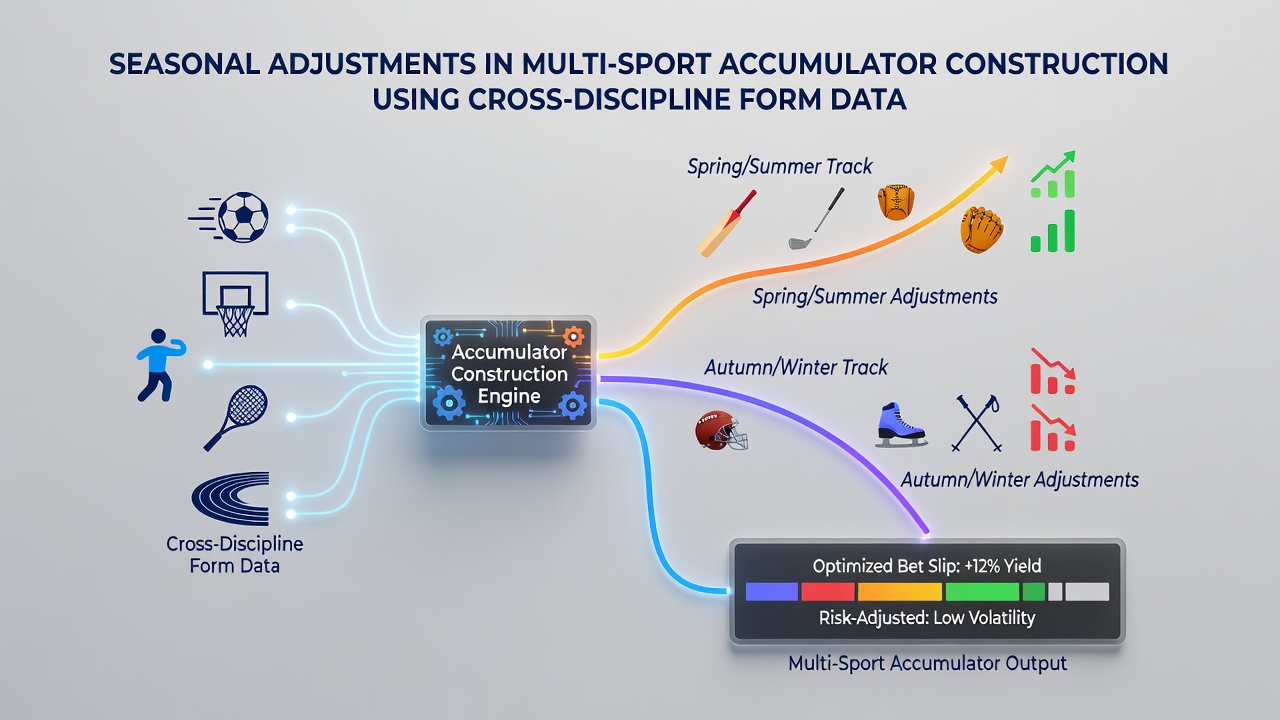
Seasonal adjustments play a central role in constructing multi-sport accumulators because performance patterns shift with weather cycles, fixture congestion and training schedules across different athletic codes. Researchers track these variables through cross-discipline form data drawn from soccer leagues, basketball conferences and horse racing circuits, then apply the insights to refine bet structures. Observers note that data sets collected during off-peak months often differ markedly from those gathered in peak competition windows, which creates opportunities for precise weighting when multiple sports appear in a single accumulator.
Core Components of Cross-Discipline Form Data
Form data encompasses recent results, player availability metrics, travel fatigue indicators and surface-specific statistics, all of which researchers compile into unified databases. When analysts combine soccer pitch conditions with basketball court usage patterns and turf ratings from racing venues, they generate composite models that account for seasonal overlap. Those who study these datasets find that August periods frequently mark transition points where pre-season soccer fitness levels intersect with late-summer basketball conditioning programs and early autumn racing schedules. Evidence from multiple jurisdictions shows that such overlap periods produce measurable changes in variance across sports, prompting adjustments to stake allocation and selection criteria within accumulators.
Applying Seasonal Adjustments in August 2026
During August 2026, fixture lists across European soccer competitions entered their opening phase while North American basketball teams completed summer league evaluations and several major racing festivals prepared for autumn campaigns. Analysts adjusted historical form data by incorporating temperature ranges, humidity levels and daylight duration statistics that affect athlete output in each discipline. Figures from the Australian Sports Commission indicate that heat acclimatisation protocols used in southern hemisphere winter training translate into performance baselines applicable to northern summer events, allowing cross-referencing when multi-sport selections span hemispheres. Data from the National Collegiate Athletic Association further reveals that basketball player workload management during August exhibition matches correlates with reduced injury rates later in the season, supplying additional variables for accumulator constructors who blend basketball legs with soccer and racing outcomes.

Methods for Integrating Diverse Data Streams
Construction teams employ normalisation techniques that convert raw statistics from different scoring systems into comparable scales, then layer seasonal modifiers derived from meteorological records and travel logs. One established approach involves weighting recent results more heavily during periods of rapid environmental change, such as the shift from summer heat to cooler evenings that occurs in many racing and soccer regions. Another technique tracks cross-sport correlations, for instance linking basketball shooting percentages under high humidity to soccer passing accuracy in similar atmospheric conditions. Studies published by the Canadian Centre for Ethics in Sport demonstrate that such correlations hold statistical significance when sample sizes exceed several thousand events, supporting their inclusion in accumulator algorithms. Those who apply these methods report improved calibration of implied probabilities across the selected legs.
Challenges in Data Alignment
Alignment difficulties arise because scoring conventions, match durations and rest intervals differ substantially between soccer, basketball and horse racing. Researchers address these differences by creating conversion tables that map equivalent fatigue thresholds and recovery windows across codes. August scheduling anomalies, including double-headers in basketball and condensed racing meetings, introduce additional variance that requires explicit seasonal flags within the dataset. Industry reports from the European Gaming and Betting Association highlight that transparent documentation of these flags enables consistent replication of results across different accumulator platforms. Observers further note that incomplete travel or weather data can skew outputs, prompting ongoing investment in automated collection systems that pull real-time feeds from multiple sports governing bodies.
Conclusion
Seasonal adjustments grounded in cross-discipline form data provide a structured framework for refining multi-sport accumulators as competition calendars evolve. Continued collection of August 2026 performance metrics alongside historical baselines allows analysts to refine weighting schemes and correlation models. Organisations such as the Australian Sports Commission and the National Collegiate Athletic Association supply foundational datasets that support these refinements across regions. As data integration practices advance, accumulator construction gains precision through systematic accounting for seasonal variables that affect outcomes in soccer, basketball and horse racing alike.