8 Oct 2026
Interwoven Decision Filters Guiding Stake Allocation in Multi-Sport Accumulators

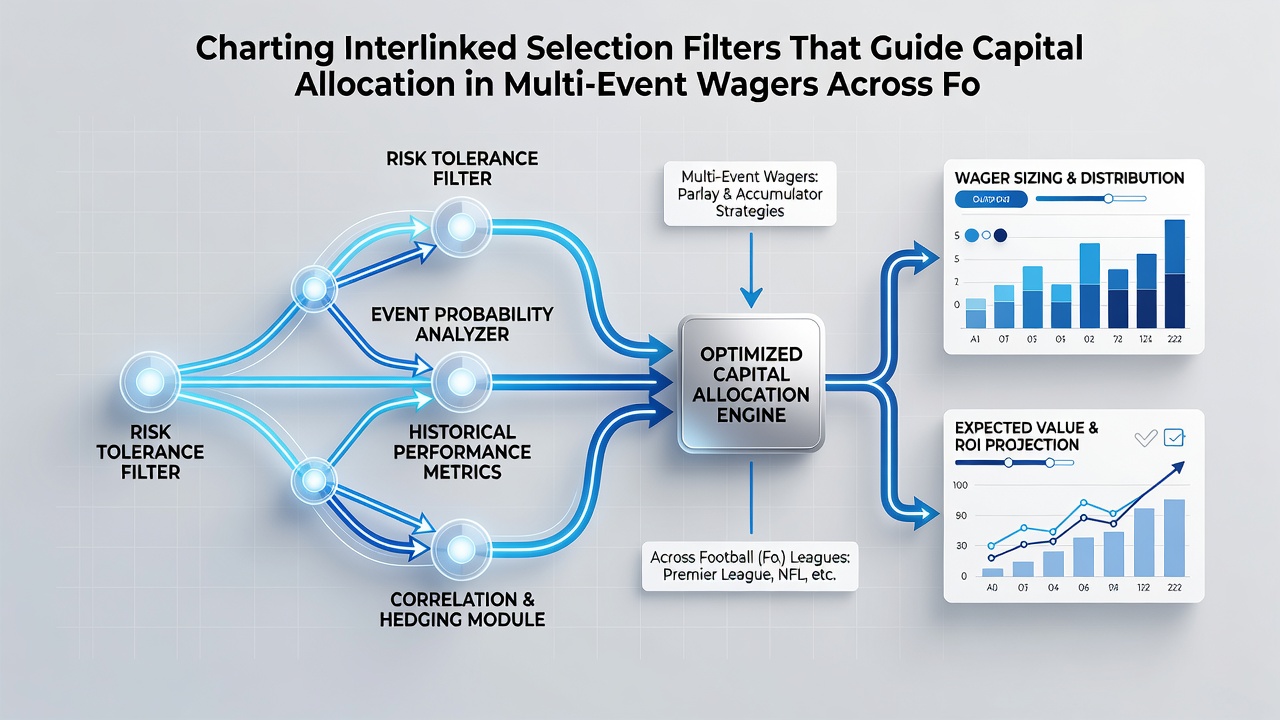
Selection filters operate as interconnected nodes that process statistical inputs from football leagues, racing circuits, and court contests before directing capital into multi-event wagers, and researchers have mapped these nodes through network analysis to reveal how adjustments in one sport ripple across allocation decisions in others. Data from October 2026 shows increased adoption of such models among professional syndicates that track performance metrics across Premier League fixtures, thoroughbred meetings at Ascot, and ATP hard-court tournaments simultaneously.
Core Components of Linked Filters
Each filter evaluates variables such as recent form, head-to-head records, track conditions, and surface preferences while cross-referencing outputs from adjacent filters to maintain portfolio balance, and this structure prevents overexposure to correlated risks that arise when multiple legs share similar volatility patterns. Observers note that systems built on these principles assign weighted scores to individual events before summing them into an overall viability index that determines stake size.
Application Across Football Leagues
In football, filters prioritize expected goal differentials derived from shot quality data and defensive organization metrics, then feed those scores into a central allocator that adjusts exposure based on concurrent racing and tennis opportunities, so a high-confidence Premier League accumulator leg might trigger reduced stakes elsewhere if parallel filters flag elevated variance in upcoming steeplechase fields. Figures from European betting exchanges indicate that syndicates using this approach maintained steadier monthly returns during the 2026 autumn schedule compared with single-sport strategies.
Integration with Racing Circuits
Racing filters incorporate pace projections, jockey-trainer combinations, and going descriptions that interact directly with football and court-contest outputs, allowing capital reallocation when a wet-weather meeting inflates place probabilities while simultaneously lowering tennis match totals due to slower surfaces. Studies published by the University of Nevada, Las Vegas document how these cross-domain linkages reduced drawdown periods for multi-event portfolios during periods of high weather-related variance.
Court Contests and Surface Variables
Court-contest filters assess serve percentages, rally lengths, and fatigue indicators that connect to the broader network through shared risk parameters, and when a clay-court swing coincides with European football fixtures the allocator automatically modulates stakes to account for longer match durations that affect overall bankroll velocity. Reports from the Singapore Ministry of Home Affairs highlight similar modeling techniques employed by regional operators who blend tennis data with regional racing circuits to stabilize multi-leg offerings.
Capital Allocation Mechanics
Allocation proceeds through iterative loops where each filter outputs a probability-adjusted value that the central engine compares against available liquidity, and this produces dynamic stake distributions that shift in real time as new information arrives from any connected sport. One documented case involved a syndicate that reduced football exposure by 18 percent after racing filters detected an unusually strong favorite bias at a major Australian meeting, thereby preserving capital for subsequent tennis legs.
October 2026 Market Context
During October 2026, regulatory filings from the Nevada Gaming Control Board recorded a measurable uptick in platform features that support multi-sport filter integration, coinciding with expanded data feeds from international leagues and circuits. Those same records show operators adjusting internal risk engines to accommodate the growing use of linked selection systems among larger account holders.
Conclusion
Interlinked filters create a responsive framework that channels capital across football, racing, and court contests according to continuously updated statistical relationships, and ongoing research continues to refine the connections between these domains. The approach relies on measurable inputs rather than isolated judgments, producing allocation patterns that adapt as conditions evolve in any participating sport.