10 Sep 2026
Intersecting Metrics: Layered Frameworks for Football and Equine Data Integration
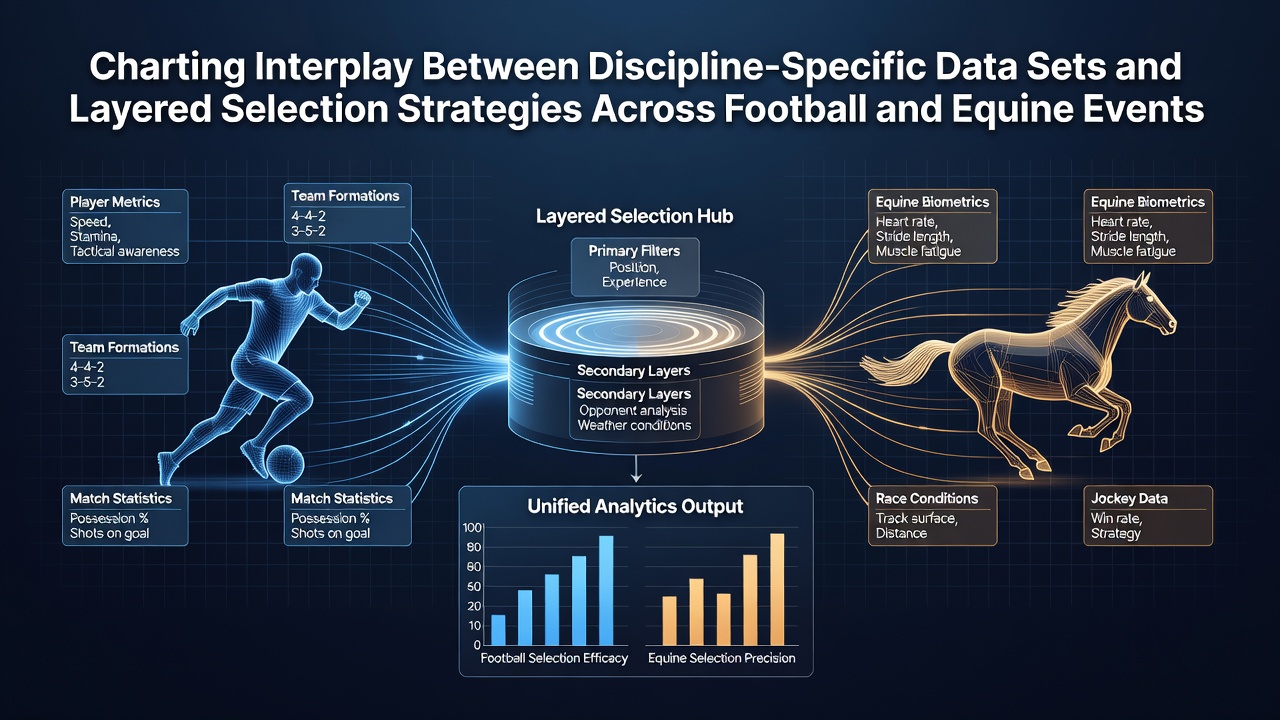
Analysts track discipline-specific data sets in football through metrics such as possession percentages, expected goals, and player workload indices while equine events rely on speed figures, track conditions, and pedigree records. These separate collections feed into layered selection strategies that combine multiple filters before final outputs emerge. Observers note how the process begins with raw inputs and progresses through successive stages that refine choices across both sports.
Core Data Components in Each Field
Football data sets typically include match-level variables like pass completion rates and defensive actions alongside seasonal trends that capture team form over multiple fixtures. Equine records focus on individual horse metrics including sectional times, going descriptions, and historical performance against similar opposition. Researchers have mapped these elements to show distinct patterns that resist direct transfer between the two domains because football operates in team environments whereas equine competitions emphasize single-athlete variables.
Selection layers start with broad screening that eliminates obvious mismatches then move to intermediate filters that weigh contextual factors such as recent schedule density in football or weather impacts on turf in racing. Final layers apply cross-checks that compare outputs against historical benchmarks before any prediction locks in. Data shows this sequential approach reduces noise because each stage removes cases that fail earlier criteria.
Integration Points Across Domains
Interplay occurs when analysts adapt filtering techniques from one sport to the other without copying raw numbers. For instance a football model that layers fixture congestion against player availability can inspire similar sequencing in equine selections where trainers' recent runners inform probability adjustments. Figures from industry reports indicate such cross-application has grown as digital platforms aggregate larger volumes of structured information.
September 2026 Developments
During September 2026 several European competitions introduced enhanced tracking systems that supplied granular positional data for football while major racing festivals expanded biometric monitoring for horses. These additions created fresh data streams that layered selection processes then incorporated through updated weighting schemes. Reports from the Australian Sports Commission highlight parallel advances in performance analytics that reached both team and individual sports around the same period.
One documented workflow begins with automated scraping of match files and race results then applies rule-based pruning to isolate viable candidates. Subsequent stages introduce probabilistic scoring that blends historical edges with current conditions. Those who manage these systems report that football layers often emphasize collective metrics whereas equine layers isolate individual variables yet the overall architecture remains comparable.

Practical Layer Sequencing
Initial layers handle volume reduction by discarding entries outside defined ranges such as low possession sides in football or horses with poor recent speed ratings. Mid-level layers introduce interaction terms that multiply variables for instance combining opponent strength with home advantage in matches or distance suitability with jockey statistics in races. Terminal layers enforce consistency checks that compare model outputs against independent benchmarks drawn from league tables or official result archives.
Evidence from academic studies at institutions including the University of Queensland demonstrates that multi-stage filtering improves calibration across both sports because early elimination prevents later stages from processing irrelevant cases. The same research indicates that discipline-specific calibration remains necessary even after structural similarities are identified.
Emerging Patterns in Combined Use
Operators who maintain parallel coverage of football and equine events often share backend infrastructure for data ingestion while maintaining separate validation routines. This separation preserves accuracy because football data arrives in high-frequency bursts during match days whereas equine data clusters around race meetings. Layered strategies accommodate these rhythms by scheduling intensive computation after each influx rather than running continuous real-time updates.
International bodies such as the Asian Racing Federation have published guidelines on data governance that apply equally to team and individual sports. These documents emphasize audit trails for each selection layer so that downstream adjustments can trace back to specific inputs. Observers note that adherence to such standards has increased transparency without altering the fundamental interplay between raw sets and refined outputs.
Conclusion
The mapping of discipline-specific data sets onto layered selection strategies reveals consistent architectural principles that operate across football and equine events. Each domain supplies unique inputs yet benefits from sequential filtering that reduces complexity while preserving relevant signals. Continued expansion of tracking technologies through 2026 and beyond supplies richer material for these frameworks while regulatory and academic sources continue to shape how practitioners structure their processes.