24 Sep 2026
Integrating Autonomous Predictions for Methodical Fund Allocation in Sports and Racing Markets

Professionals in multi-sport forecasting environments coordinate separate prediction systems to support measured capital allocation across football leagues, tennis competitions, and horse racing circuits, and data from September 2026 indicates continued growth in these coordinated approaches. Researchers at institutions tracking international betting patterns note that operators combine outputs from distinct statistical models rather than relying on single sources, which allows for cross-verification before funds move into wagers on weekend fixtures or festival meetings.
League schedules generate high volumes of independent forecasts each week, with analysts examining team metrics, player availability, and historical results separately from those covering court events. Observers note that synchronization occurs through weighted averaging techniques where each forecast receives a reliability score derived from past accuracy records, and this process extends to equine events where track conditions and form cycles introduce additional variables that require separate modeling before capital decisions finalize.
Core Mechanisms Behind Forecast Alignment
Alignment starts with standardized data inputs fed into parallel systems, then proceeds through reconciliation steps that flag discrepancies exceeding predefined thresholds. Studies from Canadian research centers show that such reconciliation reduces variance in projected returns when applied across different event types, while Australian industry reports highlight similar patterns in thoroughbred markets during major spring carnivals. Those who manage these systems often deploy software that timestamps each forecast arrival and applies Bayesian updates to refine combined probabilities as new information emerges.
Capital deployment follows once reconciled outputs reach acceptable confidence levels, with allocation rules scaling position sizes according to the degree of agreement among independent sources. This approach appears in professional operations handling both domestic league matches and international court tournaments, where a single mismatched forecast can trigger reduced stake sizes or outright exclusion from that day's activity.
Application Across Football, Tennis, and Racing
Football fixtures benefit from synchronization because multiple leagues run concurrently, creating opportunities to balance exposure across matches with varying forecast alignments. Court battles in tennis add volatility through individual player matchups that demand dedicated models for surface preferences and fatigue factors, while equine circuits introduce variables like pace maps and barrier draws that independent analysts evaluate before any combined signal triggers deployment. Data indicates that operators active in September 2026 maintained separate dashboards for each sport category to facilitate rapid cross-checking during peak fixture periods.
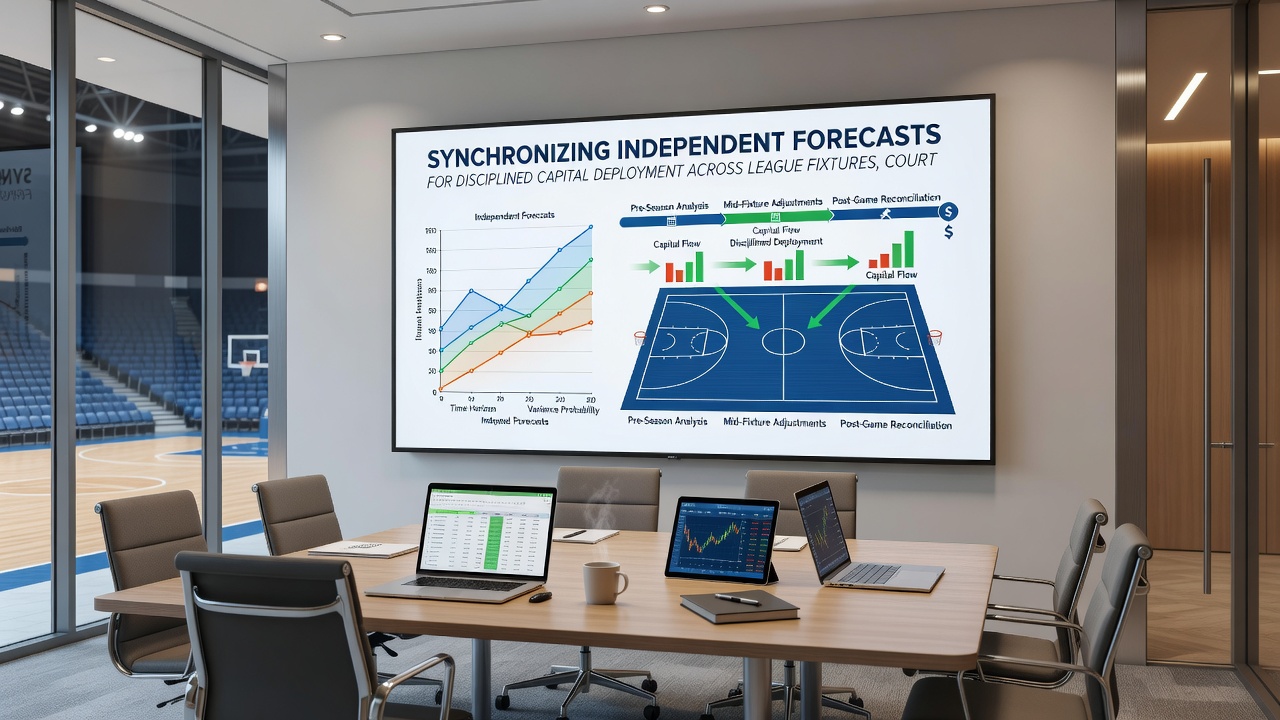
One documented case involved a European operator that linked its league forecasting engine wth tennis and racing modules through an API layer, allowing real-time adjustment when one sport's predictions diverged sharply from the others. The resulting framework supported disciplined scaling of positions, particularly during overlapping schedules where capital had to stretch across several event types without concentration in any single outcome cluster.
Regulatory and Industry Context in Late 2026
European regulatory updates scheduled for implementation after September 2026 emphasize transparent record-keeping of forecast sources used in automated wagering systems, and similar requirements have surfaced in other jurisdictions tracking multi-sport operators. Industry associations in North America have published guidelines recommending documented synchronization protocols as part of risk management frameworks, which encourages broader adoption of these methods among firms handling diverse event portfolios.
Academic papers examining combined forecasting performance across sports demonstrate measurable improvements in calibration when independent models undergo structured integration, particularly when event categories differ in data density and outcome frequency. Those who implement these protocols report steadier capital curves during periods of high fixture density, such as international breaks that coincide with racing festivals.
Conclusion
Synchronization of independent forecasts supports methodical capital deployment by establishing verifiable checkpoints before funds enter football, tennis, or racing markets. Continued refinement of these processes through 2026 reflects ongoing adaptation to regulatory expectations and operational demands across multiple jurisdictions, with data flows from September onward providing further benchmarks for practitioners refining their alignment techniques.