22 Oct 2026
Examining Travel Fatigue Patterns in Performance Statistics to Improve Accumulator Selections Across Soccer and Basketball Seasons

Travel across time zones creates measurable disruptions in athlete output, and analysts track these shifts through detailed performance datasets that span multiple seasons. Researchers compile metrics such as sprint distance covered, shooting accuracy, and defensive reaction times from leagues in Europe and North America, then correlate them with flight durations and recovery windows. Data from October 2026 schedules highlight clusters of eastbound and westbound travel that coincide with dense fixture lists in both soccer and basketball calendars.
Quantifying Circadian Shifts in Athletic Output
Studies from institutions like the Australian Institute of Sport document how eastward travel of five or more hours typically reduces high-intensity running by 8 to 12 percent in the first 48 hours after arrival. Westward journeys produce smaller initial drops yet extend recovery periods because the body adapts more slowly to phase advances. Performance databases maintained by professional clubs show consistent patterns: basketball teams crossing the Atlantic for preseason tournaments post lower three-point percentages during the opening two games, while soccer squads returning from Asian tours exhibit elevated error rates in passing accuracy during domestic league openers.
Seasonal Schedule Overlaps and Data Integration
October 2026 features overlapping international breaks and domestic calendars that force rapid transcontinental movement for several clubs. Soccer sides in the UEFA Champions League often combine midweek European fixtures with weekend Premier League or La Liga matches, creating compressed recovery intervals. Basketball schedules add complexity when NBA teams play back-to-back games after long-haul flights from Europe or Asia. Analysts integrate these timelines into unified datasets that flag periods of elevated travel load across both sports, allowing construction of accumulators that account for documented performance dips rather than relying on raw form alone.
Application to Multi-Sport Accumulator Models
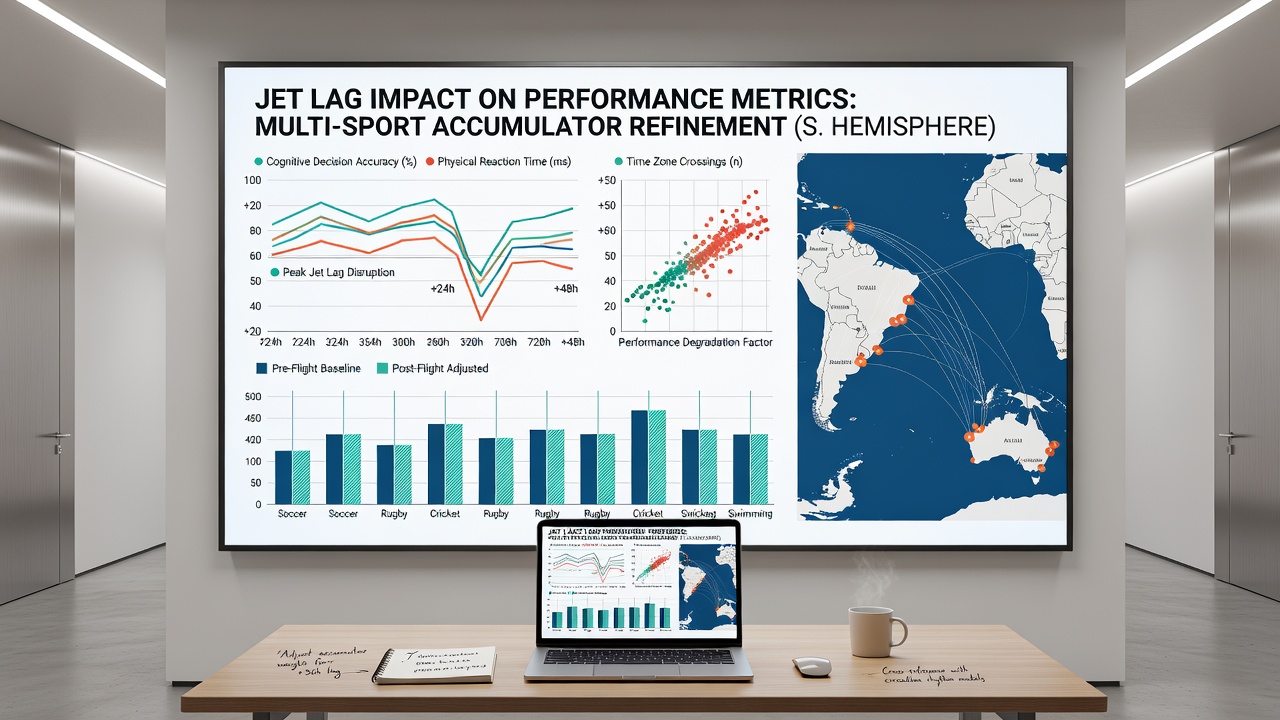
Performance tracking platforms now merge jet lag indicators with historical betting markets to adjust probability estimates for individual matches. When a soccer team arrives in a new time zone less than 72 hours before kickoff, models apply downward adjustments to expected goal totals based on observed reductions in shots on target. Similar corrections appear in basketball projections, where teams with minimal acclimatization time show decreased offensive efficiency ratings in away contests. One study released by the University of Waterloo in Canada examined three NBA seasons and found that westward-traveling teams covered the spread at lower rates during the first game of a road trip, providing quantitative inputs for accumulator weighting systems.
Regional Regulatory Context and Data Sources
European regulators and North American sports bodies maintain open performance repositories that feed these analytical frameworks. The Australian Sports Commission publishes longitudinal studies on circadian adaptation that analysts cross-reference with league schedules, while the NCAA research division supplies collegiate basketball data used to calibrate professional models. These sources supply objective benchmarks that accumulator construction tools incorporate without direct reliance on any single jurisdiction's gambling oversight.
Future Refinements and October 2026 Outlook
Emerging sensor technology now records real-time heart-rate variability and sleep metrics during flights, feeding live updates into performance databases. As October 2026 fixtures unfold, analysts expect increased granularity in travel-fatigue models as more clubs adopt wearable integration. The resulting datasets continue to refine multi-sport accumulator frameworks by layering circadian variables onto traditional statistical inputs, producing selections grounded in observed physiological responses rather than unadjusted historical averages.