15 Aug 2026
Cross-Verified Forecasts Driving Progressive Stake Models in Football Accumulators and Court Events
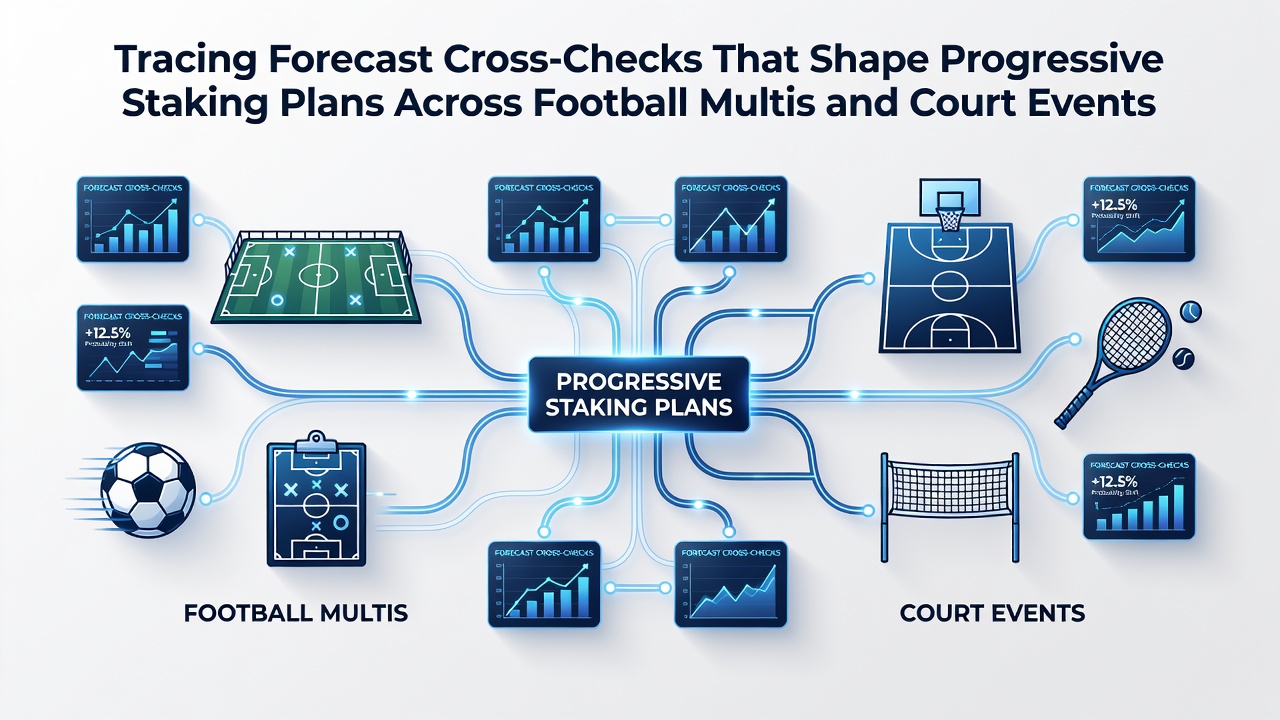
Forecast cross-checks operate as verification layers that compare multiple prediction sources before stake adjustments occur in progressive systems, and these processes apply directly to football multis alongside court events such as tennis and basketball fixtures. Data from industry reports indicate that operators track forecast consistency across statistical models, historical performance metrics, and real-time variables to determine when stake progression should accelerate or pause. Analysts note that August 2026 saw increased integration of these cross-check protocols as leagues resumed full schedules after summer breaks, with volume rising in both soccer accumulators and court-based wagers.
Core Mechanisms Behind Forecast Cross-Checks
Operators collect forecasts from quantitative algorithms, expert assessments, and market movement indicators then run automated comparisons that flag discrepancies exceeding predefined thresholds. When alignment reaches set percentages, progressive staking algorithms advance the next bet size according to fixed multipliers, whereas divergence triggers a hold or reduction in stake level. Research from academic sources shows that such cross-check routines reduce variance in accumulator outcomes by requiring confirmation across at least three independent data streams before any stake increase activates.
Application to Football Multis
Football multis combine selections from different matches into single wagers, and progressive plans scale stake amounts based on verified forecast reliability. Systems first validate team form, head-to-head records, and injury updates through cross-referenced databases, then apply a confidence score that dictates whether the next leg receives an increased allocation. Figures from European betting associations reveal that multis with verified cross-checks maintained higher completion rates through group stages in major tournaments during the 2025-2026 season.
Stake progression follows a sequence where an initial unit bet doubles only after two consecutive verified wins, yet remains flat when cross-checks show conflicting signals from weather data or referee assignments. Observers note that this method appeared in August 2026 across major European leagues as operators adjusted systems ahead of the new campaign.
Extension to Court Events
Court events encompass tennis matches and basketball games where progressive staking relies on similar verification steps applied to player fatigue indicators, surface conditions, and head-to-head statistics. Cross-check protocols compare serve percentage models against live betting market shifts before advancing stake sizes on multi-leg parlays. Data compiled by North American gaming regulators indicate that court-event accumulators using verified forecasts recorded steadier bankroll trajectories over extended tournament periods compared with unverified approaches.
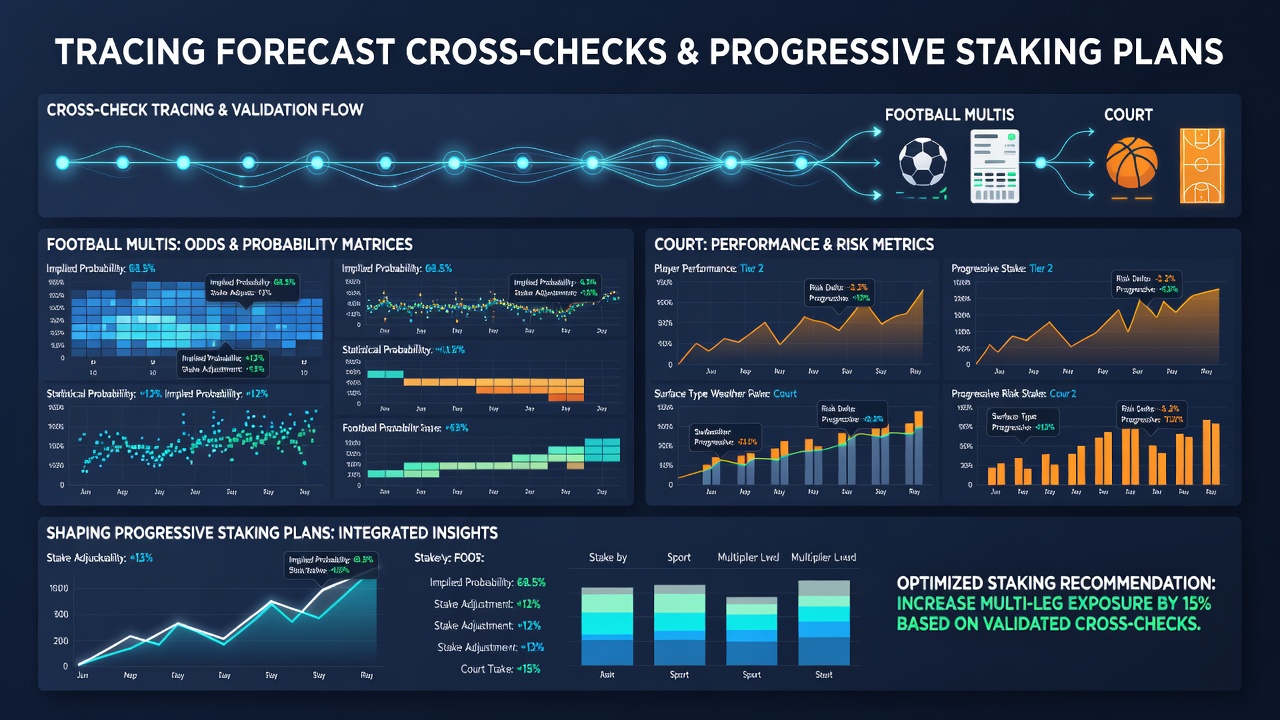
Progressive plans in these markets often incorporate a reset function triggered when forecast cross-checks fall below 70 percent agreement, returning stake levels to baseline before the next selection cycle begins. Studies from Australian research institutions demonstrate that such resets preserved capital during high-volatility periods such as grand slam qualifying rounds and NBA play-in tournaments.
Integration Patterns Observed in 2026
By August 2026 platforms combined football multis with court events into hybrid progressive plans that applied unified cross-check criteria across both categories. Algorithms weighted soccer goal-scoring forecasts alongside basketball point-spread models using shared reliability metrics, allowing stake increases only when both domains produced aligned signals. Industry organizations tracking global betting volumes recorded measurable growth in these hybrid structures during the summer transfer window and pre-season exhibitions.
Operators further refined thresholds after reviewing performance data from the prior season, tightening cross-check requirements for high-stake progressions while loosening them for lower-risk base units. This calibration reflected patterns identified in regulatory filings submitted to bodies outside the United Kingdom.
Conclusion
Forecast cross-checks continue to shape progressive staking by enforcing multi-source verification before any stake advancement occurs in football multis and court events. Data collected through 2026 confirm that these layered checks correlate with more consistent outcomes across accumulator formats, while August updates demonstrated ongoing refinement of the underlying algorithms. External sources such as European Gaming and Betting Association reports and university-led studies on betting variance provide additional context for the measurable effects of these verification processes on stake progression models.